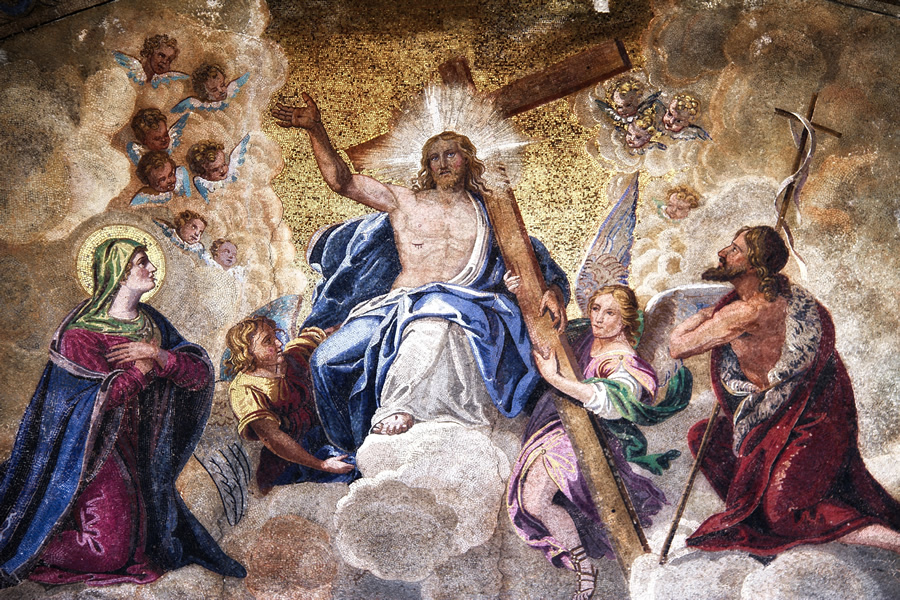
Living Easter Joy
by Fr. Tony Okolo C.S.Sp., V.F. | 05/14/2026 | Weekly ReflectionBeloved Parishioners,
In this week Pastor’s Corner, my reflection is focused on Eastertide. What we easily forget is that the Church designed the liturgical calendar to do one major thing, namely, to make Christians live the life of Christ through time. The liturgical year is theologically and spiritually structured to help the Church remember, celebrate, relive, and interiorize the mysteries of salvation.
This is why the fathers of the Second Vatican Council, through the document Sacrosanctum Concilium, insist that we celebrate the liturgy of the Church in a manner that is not only befitting but also actively participatory.
One important part of the liturgical calendar to which most of us do not pay enough attention is Eastertide. Many Catholics take Lent seriously because it is visibly demanding: fasting, ashes, Stations of the Cross, and penance. But Eastertide often gets neglected because joy is harder to sustain than sorrow. Yet, in the mind of the Church, Easter is the center of the entire Christian year. As Saint Paul boldly declares, “If Christ has not been raised, then our preaching is in vain and your faith is in vain” (1 Cor. 15:14). While many of us celebrate Easter Sunday with great enthusiasm, the deeper significance of Eastertide is often neglected. For many, Easter ends with the passing of Easter Sunday. The Church, however, in her wisdom, extends the celebration for fifty days leading to Pentecost because the mystery of the Resurrection is too profound to be exhausted in a single day.
This has great implications for our Christian living. Resurrection must produce a visible change in our lives. A Christian who lives Lent intensely but ignores Eastertide is spiritually unbalanced—almost like remaining at the Cross without entering the Resurrection. However, there are some concrete ways we Catholics can recover the significance of Eastertide. First, we ought to stop treating Easter as one day. The Church celebrates Easter for fifty days, not merely on Easter Sunday. During these fifty days, we should consciously ask ourselves: “How am I living as a Resurrection people during these weeks?”
During Eastertide, we can take time to read the Resurrection narratives slowly and meditatively. We should consciously spend time with John 20–21, Luke 24, and the Acts of the Apostles. Notice how the disciples move from fear to courage, from confusion to mission, and from hiding to witness. This practically teaches us that Eastertide is about transformation.
Third, we must recover joy as a spiritual discipline. Some Christians are very accustomed to guilt, fear, and spiritual heaviness, but unfamiliar with redeemed joy. Yet Resurrection faith should produce hope, confidence, and interior freedom. As Nehemiah proclaimed, “The joy of the Lord is your strength” (Neh. 8:10).
Fourth, we should use Eastertide to prepare intentionally for Pentecost. Most Catholics prepare seriously for Christmas and Lent, but only a few prepare for Pentecost. Yet the disciples spent days praying and waiting for the Holy Spirit. We Catholics should pray for renewal, invoke the Holy Spirit daily, make a Pentecost novena, and ask for spiritual gifts and boldness. Pentecost should not arrive unnoticed.
Fifth, we must allow Easter to transform our daily living. If Christ is risen, then despair is not ultimate, sin is not unconquerable, suffering is not meaningless, and death is not final. Eastertide should affect how we speak, forgive, hope, worship, and serve; otherwise, it remains only liturgical symbolism.
Another important point is that we must pay closer attention to the liturgy. The Church is already teaching Eastertide powerfully through white vestments, the Paschal candle, the repeated “Alleluia,” the Resurrection readings, the Acts of the Apostles, and the Eucharistic prayers. Many Catholics miss the impact of the season simply because they do not consciously enter into the liturgy.
Finally, we must understand that Easter leads us to mission. The risen Christ never leaves the disciples passive. Every Resurrection appearance eventually ends with: “Go,” “Feed my sheep,” “Make disciples,” and “Receive the Holy Spirit.” The true sign that someone understands Easter is not excitement alone but transformed witness.
BACK TO LIST